
Plate heat exchangers have become a popular choice in many industries—but what exactly makes them so effective? How do they work, and what makes them stand out compared to other types of heat exchangers? In this article, we’ll explore the working principle of plate heat exchangers and highlight their key features to help you understand why they might be the best solution for your heat transfer needs.
What Is the Structure of a Plate Heat Exchanger?
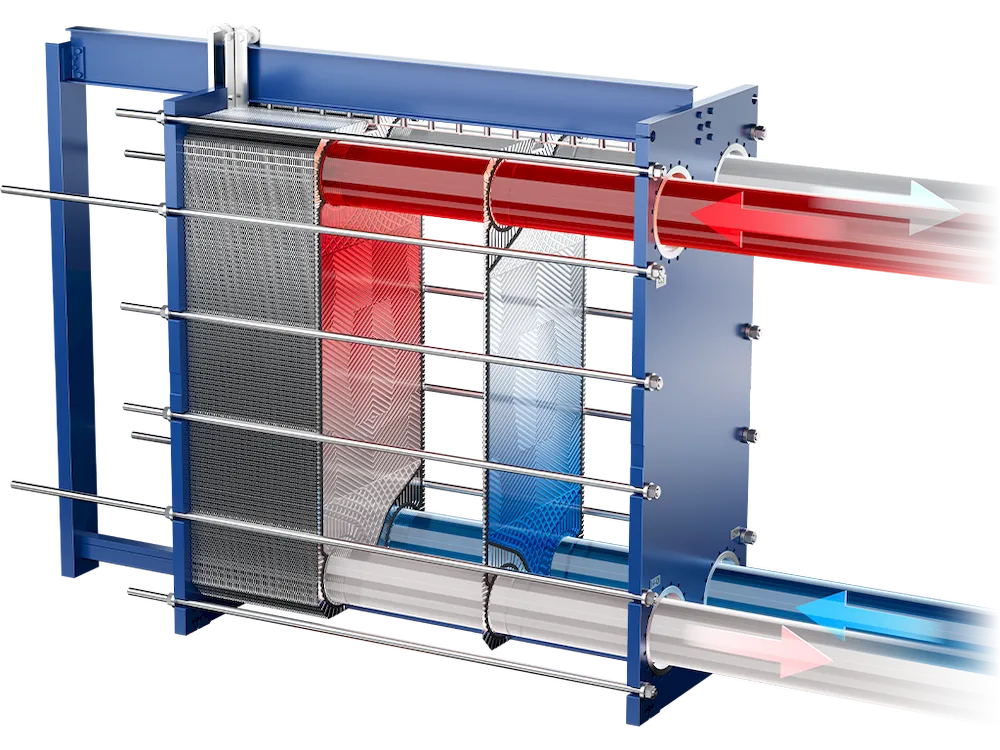
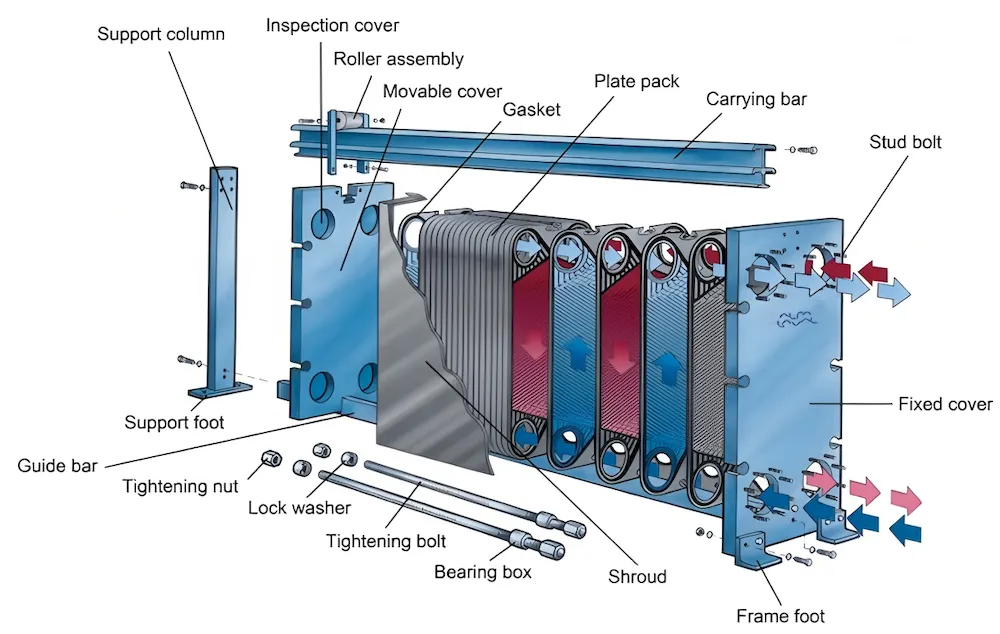
At its core, a plate heat exchanger consists of multiple thin, corrugated metal plates stacked and clamped together within a frame. These plates form several narrow flow channels that allow two fluids to pass through alternately—without mixing—enabling efficient heat exchange.
How Does a Plate Heat Exchanger Work?
So how exactly does the heat transfer happen? The two fluids—typically one hot and one cold—flow through alternating channels between the plates. The thin metal walls let heat pass through while keeping the fluids separated.
The corrugated pattern on each plate causes the fluids to become turbulent, boosting heat transfer efficiency dramatically.
Here’s the process:
The hot fluid enters the heat exchanger and flows through designated channels.
Heat passes through the thin plates to the cooler fluid in adjacent channels.
The cold fluid absorbs this heat and warms up as it flows through its channels.
Both fluids exit the exchanger at different temperatures but never mix.
What Makes Plate Heat Exchangers So Special?
Exceptional heat transfer efficiency due to large surface area and induced turbulence.
Compact size and lightweight design save space and simplify installation.
Easy to disassemble and clean, especially useful in environments prone to fouling.
Flexible capacity by adding or removing plates to match heat transfer requirements.
Low pressure drop, lowering operational costs.
Where Are Plate Heat Exchangers Commonly Used?
They find applications across a wide range of industries including:
Industrial heating and cooling
HVAC systems
Food and pharmaceutical manufacturing
Chemical processing and heat recovery
Conclusion
If you’re wondering whether a plate heat exchanger is right for your application, understanding how it works and its advantages can help you make an informed choice. Their efficiency, compactness, and flexibility make them an excellent option for many heat exchange needs.