
Shell and tube heat exchangers are one of the oldest and most widely used types of heat exchangers in industry. But what makes them so reliable and versatile? How do they function, and in which situations are they most suited? This article explains the working principle of shell and tube heat exchangers and highlights their main advantages.
1. What Is the Structure of a Shell and Tube Heat Exchanger?
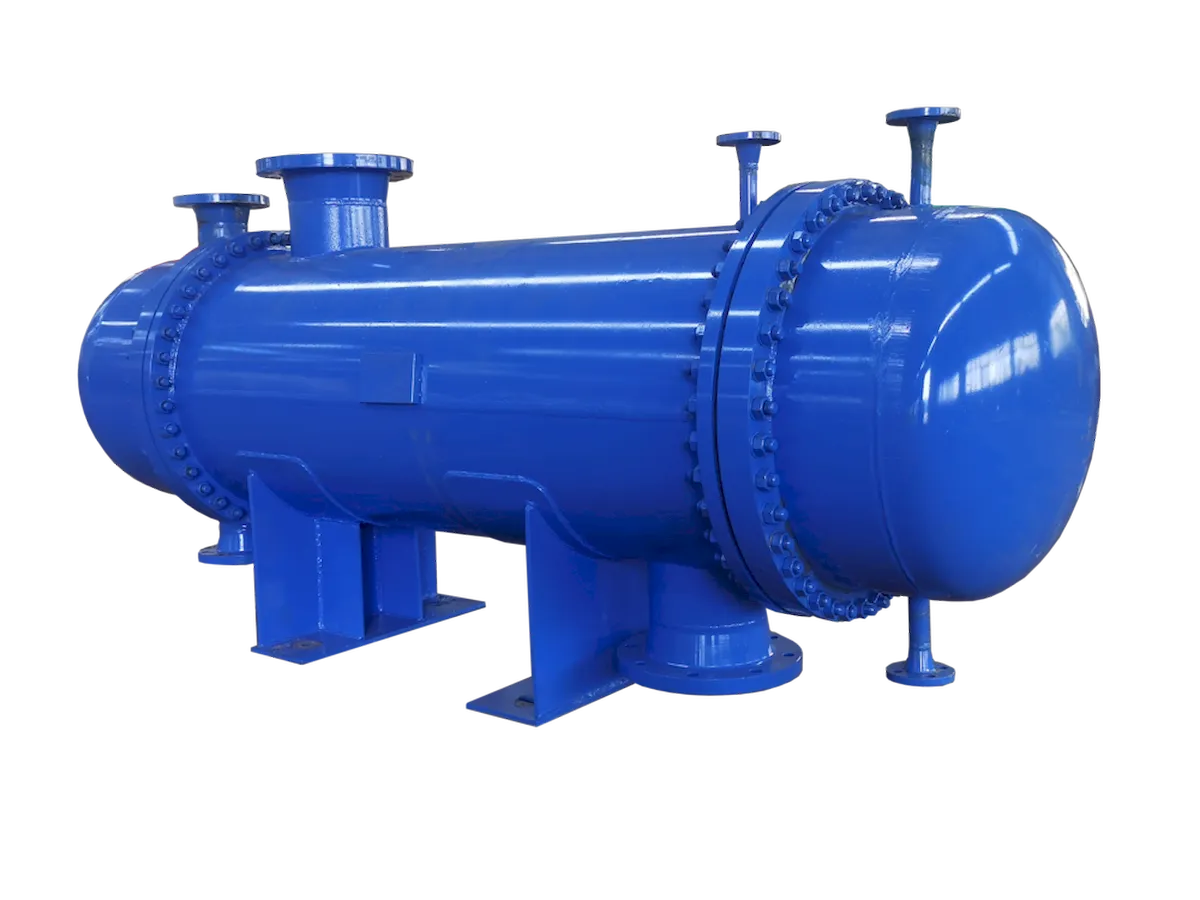
A shell and tube heat exchanger consists of a large cylindrical shell housing a bundle of smaller tubes. One fluid flows inside these tubes, while the other fluid flows around them within the shell, allowing heat transfer between the two fluids through the tube walls.
2.How Does a Shell and Tube Heat Exchanger Work?
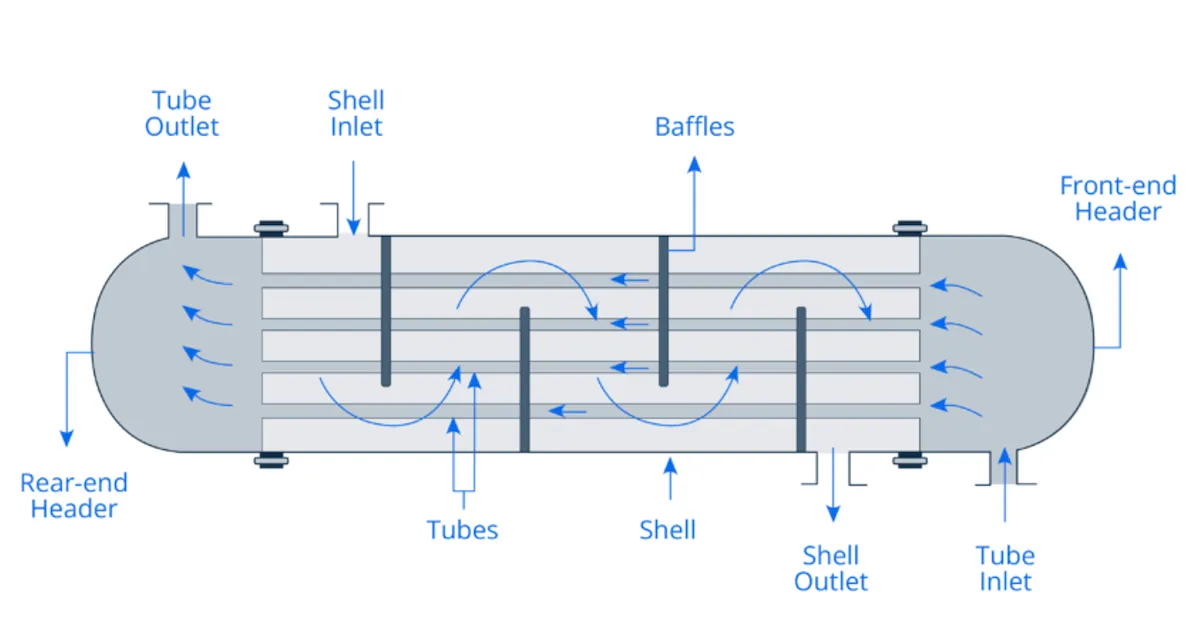
The two fluids enter the exchanger on opposite sides, flowing separately to prevent mixing. Heat is transferred from the hotter fluid to the cooler one through the tube walls.
The flow can be arranged in parallel flow, counterflow, or crossflow configurations, depending on design needs. Baffles inside the shell increase turbulence, enhancing heat transfer efficiency.
Step-by-step process:
- One fluid enters the tube side and flows through the tubes.
- The other fluid enters the shell side and flows around the tubes.
- Heat passes through the tube walls from the hot fluid to the cold fluid.
- The fluids exit at appropriate temperatures without mixing.
3. What Are the Key Advantages of Shell and Tube Heat Exchangers?
- Robust and durable design, suitable for high pressures and temperatures.
- Wide range of materials and sizes available, adaptable to many applications.
- Easy to maintain and clean, particularly for tube side with tube bundle removal options.
- Effective heat transfer with baffle-induced turbulence.
- Customizable flow arrangements for different process requirements.
4. Typical Applications
- Power generation
- Petrochemical and chemical plants
- Oil refineries
- HVAC systems
- Food and beverage processing
Conclusion
If your application involves high pressure, large heat loads, or harsh fluids, shell and tube heat exchangers offer a time-proven, reliable choice. Understanding their structure and operation will help you select and maintain the right unit for your needs.
Feel free to ask if you want a detailed comparison between shell-and-tube and plate heat exchangers or more application-specific advice!